
In aseptic pharmaceutical manufacturing, sterile filtration is the final safeguard for product safety. Pre-Use Post-Sterilization Integrity Test (PUPSIT) of sterilizing-grade filters is a critical step used to verify filter integrity before use. As an important part of the sterile filtration process, PUPSIT has become increasingly important for regulatory compliance and aseptic assurance, helping pharmaceutical manufacturers strengthen quality control and support global market requirements.
Background and Importance of PUPSIT
01 Regulatory Requirements
Sterile filtration is a critical process for products that cannot be terminally sterilized, and confirming the integrity of sterilizing-grade filters is a key control point in aseptic drug manufacturing. Regulatory expectations for filter integrity testing vary across regions, particularly regarding pre-use testing requirements, while post-use integrity testing remains a widely accepted industry standard.
· EMA (2022 version, Annex 1 on Sterile Medicinal Products): Establishes PUPSIT as the default expectation, requiring filter integrity testing after sterilization and before use.
· WHO&PIC/S: Align with the EMA approach and recommend integrity testing both before and after use.
· FDA: Does not explicitly require PUPSIT, but leading quality systems and international regulatory inspections increasingly treat it as an important audit focus.
· China NMPA: In March 2025, the draft annex for sterile drug products under Good Manufacturing Practice (GMP) specified in Articles 187 and 216 that sterilizing-grade filter assemblies must undergo integrity testing after sterilization and before use, with integrity tests performed both before and after use. This formally incorporates PUPSIT into China’s GMP requirements and further aligns regulatory expectations with international standards.
1.1 EMA (2022 version, Annex 1 on Sterile Medicinal Products): The integrity of the sterilized filter assembly should be verified by integrity testing before use (pre-use post sterilization integrity test or PUPSIT), to check for damage and loss of integrity caused by the filter preparation prior to use. A sterilizing grade filter that is used to sterilize a fluid should be subject to a non-destructive integrity test post-use prior to removal of the filter from its housing(8.87)
1.2 WHO:The integrity of the sterilized filter should be verified before use and should be confirmed immediately after use by an appropriate method such as a bubble point, diffusive flow or pressure hold test. The time taken to filter a known volume of bulk solution and the pressure difference to be used across the filter should be determined during validation and any significant differences from these during routine manufacturing should be noted and investigated. Results of these checks should be included in the batch record. The integrity of critical gas and air vent filters should be confirmed after use. The integrity of other filters should be confirmed at appropriate intervals. Consideration should be given to increased monitoring of filter integrity in processes that involve harsh conditions, e.g. the circulation of high-temperature air. (TRS NO.961-Annex 6 7.7)
1.3 PIC/S:The integrity of the sterilized filter assembly should be verified by integrity testing before use (pre-use post sterilization integrity test or PUPSIT), to check for damage and loss of integrity caused by the filter preparation prior to use. A sterilizing grade filter that is used to sterilize a fluid should be subject to a non-destructive integrity test post-use prior to removal of the filter from its housing. The integrity test process should be validated and test results should correlate to the microbial retention capability of the filter established during validation. Examples of tests that are used include bubble point, diffusive flow, water intrusion or pressure hold test. It is recognized that PUPSIT may not always be possible after sterilization due to process constraints (e.g. the filtration of very small volumes of solution). In these cases, an alternative approach may be taken providing that a thorough risk assessment has been performed and compliance is achieved by the implementation of appropriate controls to mitigate any risk of a non-integral filtration system(8.87)
1.4 FDA:Integrity testing of the filter(s) can be performed prior to processing, and should be routinely performed post-use. It is important that integrity testing be conducted after filtration to detect any filter leaks or perforations that might have occurred during the filtration.
【Guidance for Industry Sterile Drug Products Produced by Aseptic Processing-Current Good Manufacturing Practice(Contains Nonbinding Recommendations)】.
02 The Core Value of PUPSIT
· Strengthening Sterility at the Source: Verifies filter integrity after sterilization to help ensure the sterility of the filtered drug product and maintain aseptic control.
Reducing Costs and Product Loss: Lowers the risk of batch rejection and product loss caused by filter integrity failures, helping reduce manufacturing cost.
· Supporting Global Compliance: Helps pharmaceutical manufacturers meet international regulatory expectations and supports access to global markets.
Principles and Methods of Integrity Testing
Filter integrity testing methods are generally divided into destructive testing and nondestructive testing, which together form the technical basis for PUPSIT.
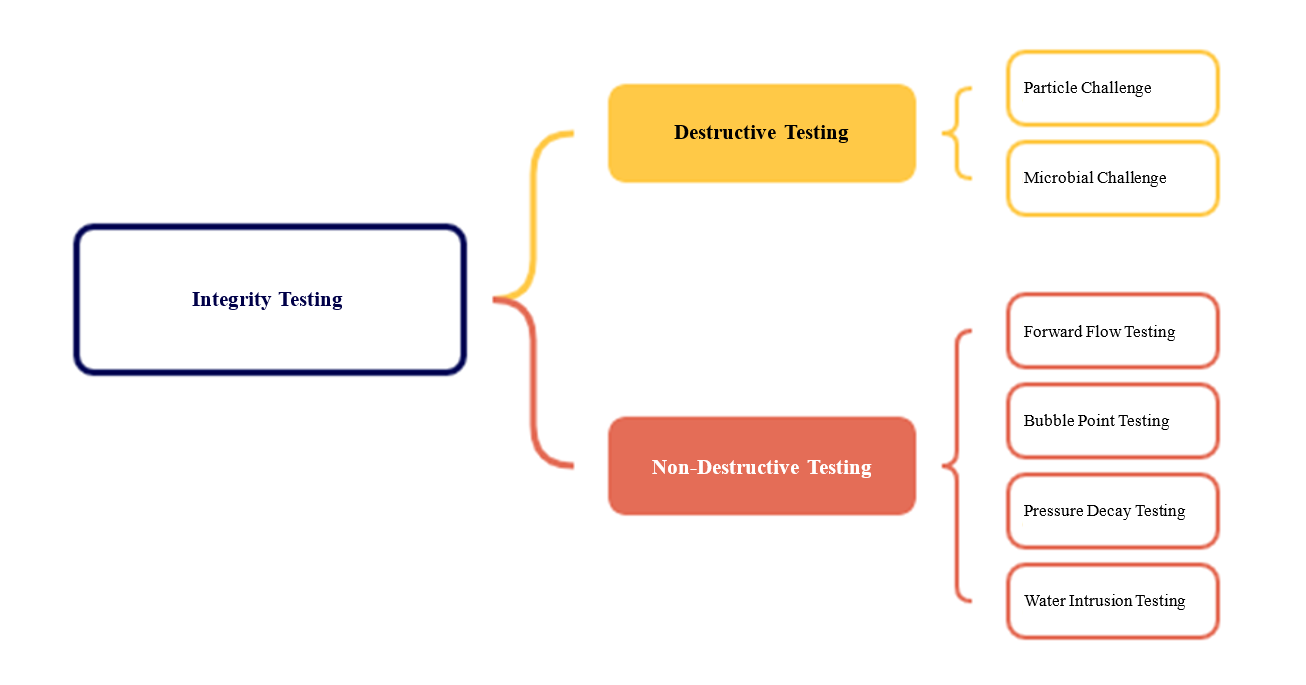
Destructive Testing:
This method uses direct bacterial challenge testing to verify the sterilizing performance of the filter. Brevundimonas diminuta is commonly used as the challenge organism at a minimum concentration of 10⁷ CFU/cm².
| Nondestructive Testing:
Bubble Point Test:
For a fully wetted membrane, gas pressure is gradually applied until it overcomes the liquid surface tension within the membrane pores and displaces the liquid from the pores. This critical pressure is defined as the bubble point pressure. Bubble point pressure is inversely related to membrane pore size: the smaller the pore size, the higher the required bubble point pressure.
Forward Flow Test:
For a fully wetted membrane, when gas pressure below the bubble point is applied, a small amount of gas passes through the membrane due to diffusion. This is measured as the forward flow value. Forward flow is generally proportional to membrane area: the larger the membrane area, the higher the forward flow value.
Standardized Operational Procedure for PUPSIT
PUPSIT must be performed in a controlled and standardized manner to maintain sterility throughout the filtration process. The procedure generally includes five core stages:
1. SIP of Filter Cartridge and System: Sterilizing-grade filters and gas filters are sterilized simultaneously using pure steam during SIP. Temperature monitoring points are placed at identified cold spots to verify effective sterilization throughout the system.
2. Filter Cartridge Wetting: The filter cartridge is wetted using Water for Injection (WFI). WFI is passed through the cartridge at a defined flow rate and pressure while gas is vented through the top exhaust port to ensure complete membrane wetting.
3. Integrity test of filter cartridge before use after sterilization: Gas from the integrity tester passes through a sterilizing gas filter and into the test assembly. The downstream side of the filter is maintained at sterile atmospheric conditions to preserve system sterility during and after testing.
4. Sterile filtration of drug solution: Sterile filtration is performed using a filter cartridge that has passed integrity testing. The vent port at the top of the filter can be connected to a sterile holding tank for venting, helping maintain sterility throughout the filtration process.
5. Post-use integrity test of filter cartridge: After filtration is completed, a post-use integrity test is performed to confirm that the filter was not damaged during processing and to verify the sterility assurance of the filtered drug product.
Morimatsu PUPSIT Integrated Solution
When implementing PUPSIT, pharmaceutical manufacturers often face both compliance challenges and practical implementation issues. Morimatsu addresses these needs through an integrated approach that combines technical risk control with engineering execution, helping manufacturers strengthen sterility assurance while improving implementation efficiency and reducing operational burden.
Production Quality Risk Control: Reducing Sterility Risks at the Source
Prevention of Defect Masking Risks
Structural defects in sterilizing-grade filters may be masked by blockage from product components or contaminants, potentially allowing a damaged filter to pass integrity testing. Morimatsu uses in-place early detection strategies to reduce the risk of defect masking and improve process reliability.
Prevention of Post-Sterilization Filter Damage
Filter materials such as PVDF, PES, and PTFE may experience irreversible deformation during high-temperature sterilization. Morimatsu minimizes the risk of thermal damage through optimized SIP process design and precise temperature monitoring.
Prevention of Installation and Connection Leakage
Traditional off-line testing may require repeated disassembly and reassembly, increasing the risk of leakage and contamination. Morimatsu adopts a fully in-place testing approach that eliminates unnecessary disassembly and reinstallation, helping reduce leakage risks and maintain system sterility.
Addressing Implementation Challenges: Simplifying Compliance
System Modification Challenges: Legacy equipment may not support PUPSIT functionality and often has limited space for expansion.
Solution: Morimatsu can provide an independent PUPSIT system that operates separately from the existing equipment, avoiding modifications to legacy control programs. The system supports features such as audit trails and report generation to meet data integrity requirements.
Limited Installation Space and Long Retrofit Cycles
Solution: Morimatsu offers a mobile PUPSIT system that connects to the filtration system during operation and can be disconnected and stored afterward without affecting system sterility. Delivery lead times can be reduced to 3–5 weeks, with on-site commissioning and validation completed in as little as 2 weeks.
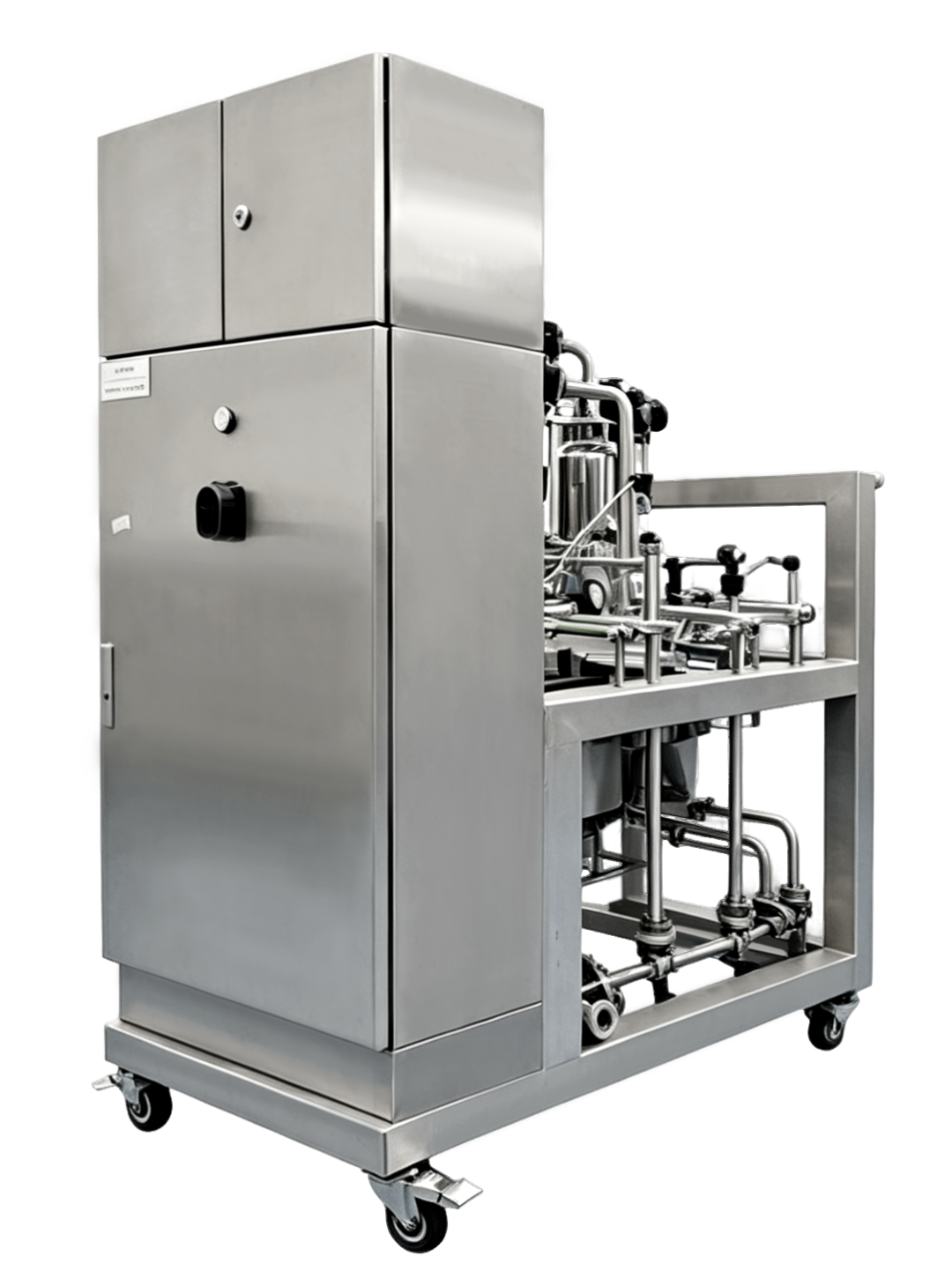
Mobile PUPSIT System
Increased Operational Complexity: Maintaining PUPSIT functionality and sterility after testing often requires additional piping and valves.
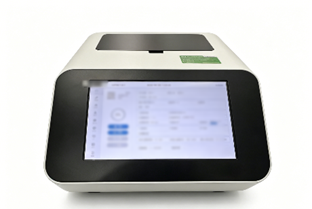
Solution: The PUPSIT system can integrate with an integrity tester to enable one-click testing and supports customized testing procedures based on customer operating preferences.
End-to-End Solutions for New Installations and Legacy System Upgrades
Morimatsu provides comprehensive PUPSIT solutions for both new system integration and existing system retrofits. Built around a stainless steel PUPSIT platform, the solutions are designed to support compliance with major global regulatory standards, including FDA, EMA, NMPA, and PIC/S requirements for aseptic manufacturing.
New System Integration
An integrated sterilizing-grade filtration module with built-in PUPSIT functionality enables filtration and integrity testing within a single system platform.
System Upgrade
PUPSIT functionality can be added to existing Morimatsu or third-party equipment with minimal system modifications, helping manufacturers achieve compliance more efficiently.
Core Configuration of the Stainless Steel PUPSIT System
• Supports both fixed and mobile configurations
• Integrated integrity tester enables automated testing
• Includes SIP/CIP capability, filter drying, audit trails, and customizable reports
• Designed to support 21 CFR Part 11 data integrity requirements
• Helps maintain batch consistency while reducing residue and contamination risks
• Suitable for large-scale sterile manufacturing with long production cycles and high stability requirements
As regulatory expectations for sterile manufacturing continue to increase, PUPSIT is becoming an essential part of global compliance strategies. It also plays a critical role in strengthening sterility assurance and reducing manufacturing risk. Built on deep process understanding and standardized workflows, and supported by an integrated “technology + engineering” approach, Morimatsu helps pharmaceutical manufacturers address compliance challenges and strengthen assurance for sterile production.
About Morimatsu LifeSciences
Morimatsu LifeSciences is a key business segment of Morimatsu International Holdings Limited (Stock Code: 2155.HK). It comprises Shanghai Morimatsu Pharmaceutical Equipment Engineering Co., Ltd., Morimatsu (Suzhou) LifeSciences Co., Ltd., Shanghai Morimatsu Biotechnology Co., Ltd., Shanghai Mori-Biounion Technology Co., Ltd., Shanghai Morisora Technology Co., Ltd., Bioengineering AG, Pharmadule Morimatsu AB, and its affiliated companies.
Morimatsu LifeSciences is dedicated in providing core equipment, process systems, and smart modular facility solutions, and services for the pharmaceutical, biopharmaceutical, medical aesthetics, and fast-moving consumer goods (FMCG) sectors including (cosmetics, food, and health supplements), as well as data centers.
Our team comprises highly experienced professionals with deep expertise in process R&D, engineering design, advanced manufacturing, compliance and validation consulting, production execution, and intelligent operations. With broad experience across diverse industries, we fully understand the unique characteristics and process requirements of various products. This enables us to deliver tailored, end-to-end process solutions from the conceptual design stage, precisely aligned with client’s specific needs.
Morimatsu LifeSciences has established a strong global presence, supported by advanced R&D centers, design hubs, and state-of-the-art manufacturing facilities worldwide. Our well-established service network spans Europe,USA,Asia-Pacific, and emerging markets. We have successfully delivered outstanding, customized solutions to clients in over 40 countries and regions, gaining extensive experience in international project execution.
As a multinational enterprise with core strengths in process technology, modular facility construction, and intelligent manufacturing, Morimatsu LifeSciences is dedicated to meeting the evolving equipment and system needs of our key industries. Through continuous innovation and technological advancement, we are steadily expanding our global footprint, driving our international strategy forward, and delivering Morimatsu’s expertise, reliability, and innovation to the global life sciences and related sectors.